


Whole-Plant Cannabis Extracts Explained: RSO, FSO, Rosin, and Safe Concentrate Use
Alan Ao, PharmD
July 22, 2026


RSO and FSO are two powerful whole-plant cannabis concentrates that can play very different roles in your wellness routine, even though they sound similar at first glance. Understanding how they’re made, how they’re used, and how they affect your body helps you choose with intention and stay within your minimum therapeutic dose.
What Is RSO? What Is FSO?
Rick Simpson Oil (RSO) is a very potent, high-THC cannabis extract originally popularized for intense medical use such as severe pain and cancer-related symptoms. It’s thick, dark, and usually considered a crude extract with fewer terpenes and minor cannabinoids preserved.
Full Spectrum Oil (FSO) is a more refined whole-plant cannabis extract designed to capture a wide range of cannabinoids and terpenes for a balanced “entourage effect.” Instead of focusing only on THC, FSO keeps more of the plant’s natural chemistry intact—closer to “as the plant intended.”
Extraction Methods: How RSO and FSO Are Made
RSO is traditionally made using strong solvents like naphtha or isopropyl alcohol, which are later boiled off to leave behind a dense, tar-like THC-heavy oil. This older extraction style delivers high potency but can sacrifice delicate terpenes and other beneficial compounds.
FSO is typically produced using food-grade ethanol or CO₂ extraction, which allows for gentler temperatures and better control. These methods preserve more cannabinoids, terpenes, and flavonoids, giving FSO a fuller, more nuanced chemical profile and broader therapeutic potential.
Rosin vs FSO: Solventless vs Solvent-Based
Rosin is a solventless concentrate made using only heat and pressure to squeeze oil out of flower or hash—no chemical solvents are involved. It’s prized for clean flavor, strong terpene expression, and a simple, mechanical process, though yields can be smaller and production more labor-intensive.
FSO is a solvent-based extract that relies on ethanol or CO₂ to dissolve cannabinoids and terpenes before removing the solvent and refining the oil. While both rosin and FSO can carry a “whole-plant” spirit, rosin comes from pure physical mechanical extraction, whereas FSO comes from carefully managed solvent chemistry aimed at capturing the full spectrum in an easy-to-dose oil.
How to Use FSO vs RSO Safely
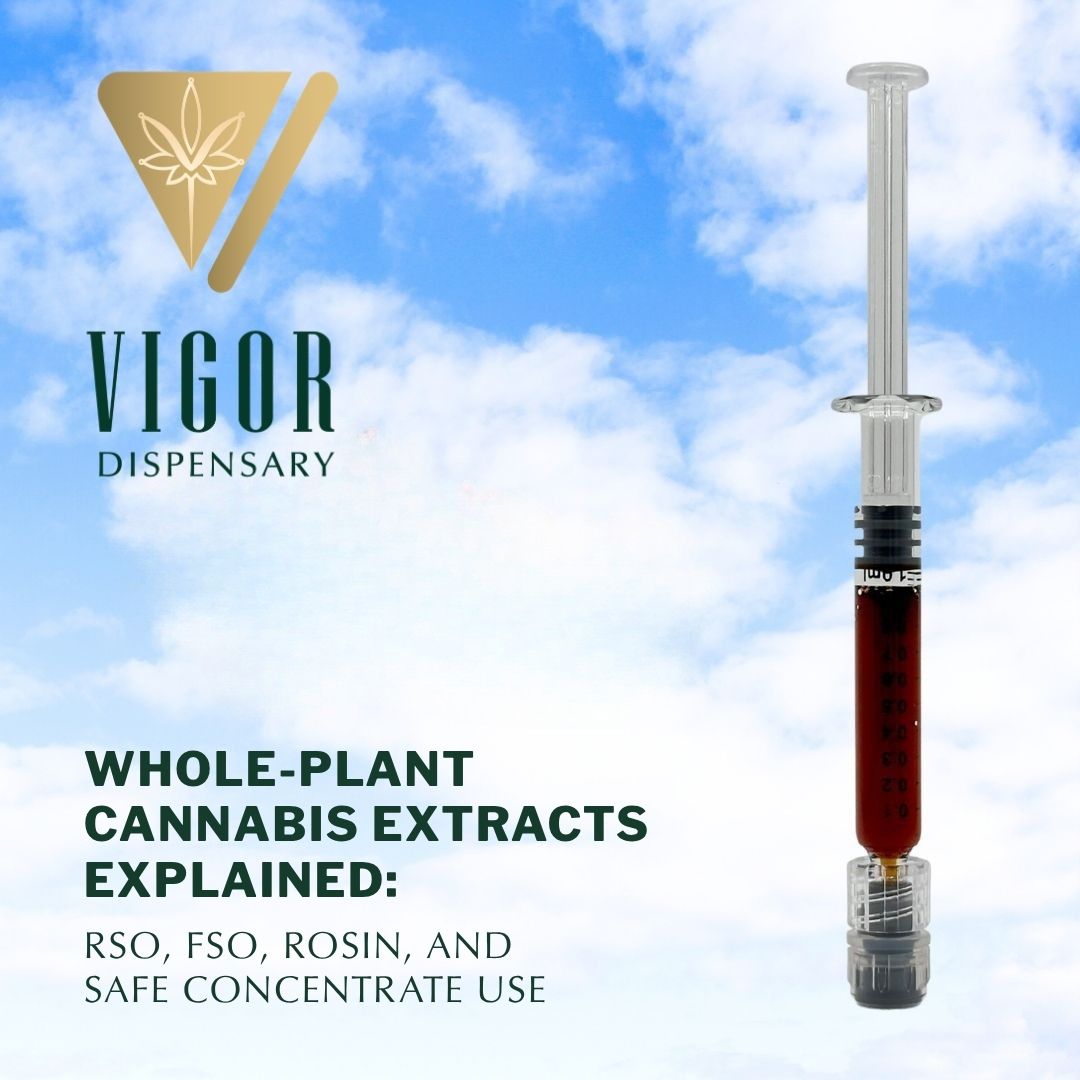
FSO is versatile and can often be eaten, used sublingually, infused into food, or in some formulations vaporized when the product is specifically labeled for inhalation. Many FSO products come in syringes, capsules, tinctures, and occasionally cartridges, depending on how the oil is formulated and refined.
RSO, by contrast, is generally intended to be taken orally or used topically—not inhaled. Because of its crude nature, thick consistency, and potential for residual compounds, RSO can be harsh and unsafe to smoke, dab, or vape, and most experts recommend strictly oral use with careful dosing.
Syringes: Unconventional Packaging, Normal Medicine
Seeing cannabis oil in a syringe can feel unconventional, but it’s one of the safest, most practical ways to package thick concentrates like FSO and RSO. Jersey Clouds Carbon Fiber FSO syringes are needle-free and designed simply to help you measure and dispense tiny, precise doses into food, under the tongue, or onto the skin.
Instead of something to worry about, think of syringes as a tool that supports accurate dosing, long-term storage, and cleaner use of powerful oils.
Medical Uses of Cannabis Concentrates
Because they are highly concentrated, FSO and RSO are often used for targeted medical and wellness applications under guidance from a healthcare professional. Common use cases include chronic pain, inflammation, severe insomnia, and symptom relief alongside traditional cancer care.
FSO’s full-spectrum profile can be especially useful for conditions that benefit from gentle, ongoing modulation of the endocannabinoid system rather than short bursts of intense intoxication. RSO’s high THC concentration is typically reserved for more serious cases where high doses are titrated carefully and monitored closely.
Why People Use Concentrates Medicinally
Patients and wellness-focused consumers may turn to concentrates when they need consistent, reliable relief in a small amount of product. Cannabis concentrates can be easier to dose and repeat compared to smoking, and they’re often chosen by people who want to avoid inhalation entirely.
Others use concentrates for microdosing, layering small, steady amounts of cannabinoids into their day to support mood, focus, or pain control without large spikes in intoxication. In each case, the goal is controlled, intentional use that prioritizes what’s best for the individual’s health and lifestyle.
Tolerance, Tolerance Breaks, and Minimum Therapeutic Dose
With potent concentrates, it’s important to aim for the minimum therapeutic dose—the smallest amount that reliably gives you benefit. Regular large dabs or big oral doses can quickly raise your tolerance, making it harder to feel relief and tempting you to keep increasing dose.
Tolerance breaks—periods where you pause heavy concentrate use—allow your endocannabinoid system to reset so lower doses become effective again. Returning with smaller, intentional amounts helps keep cannabis in a therapeutic zone instead of turning it into something you chase.
Cannabinoid Hyperemesis Syndrome and High-Dose Concentrate Use
Cannabinoid Hyperemesis Syndrome (CHS) is a condition associated with heavy, long-term cannabis use—especially at high doses—that can cause cycles of severe nausea, vomiting, and abdominal pain. While researchers are still studying exactly why it happens, high and frequent use of potent concentrates appears to increase risk for some individuals.
This is one reason “not overdoing the dabs” matters: chronic, very high-dose concentrate use can push your system out of balance and move you away from wellness. If you experience persistent nausea or feel worse as you escalate dose, it’s a sign to stop, reassess, and talk with a medical professional.
Everything in Moderation, Living With Intention
RSO, FSO, rosin, and other concentrates are powerful tools, but they’re only part of the bigger picture of your health and lifestyle. The most important question isn’t “how strong is it?” but “how can I use this in a way that truly supports me?”
Living with intention means choosing concentrates that fit your needs, respecting their potency, and practicing moderation even when products are available in very strong forms. By focusing on balance, whole-plant synergy, and the minimum dose that helps, you can let cannabis complement your life instead of control it.
Have a question?
We're here to cultivate and nourish your personal relationship with this plant.
Have a Question?
We’re here to cultivate and nourish your personal relationship with this plant.