

Why Consumers in Matawan and Tinton Falls Are Moving Toward Low‑Dose Cannabis
Alan Ao, PharmD
June 18, 2026


Across New Jersey and especially in communities like Matawan and Tinton Falls—more people are quietly shifting away from “how strong can it be?” and toward “what is the right amount for me?” Low‑dose cannabis is at the center of that shift.
This change is not about becoming less serious about cannabis. It is about becoming more intentional, more informed, and more in control of how cannabis fits into real life: work, family, sleep, training, and everything in between.
From “How High?” to “What Works?”
For years, the loudest question in cannabis culture was “What is the highest THC?” Today, especially among thoughtful consumers in Colts Neck, Holmdel, and Wall, a better question is, “What dose lets me function, feel good, and stay myself?”
Low‑dose cannabis products like Wyld Strawberry 1:20 THC:CBD supports that mindset because it:
-
Lowers the risk of unpleasant experiences.
-
Makes it easier to function at work, with kids, or in public.
-
Helps you learn what actually works for your body, not somebody else’s.
The goal is not to chase intensity. The goal is to align your dose with your life.
Titration: Finding Your Minimum Effective Dose
In pharmacy and medicine, titration means starting low and adjusting slowly until you find the minimum effective dose—the smallest amount that reliably produces the desired effect.
That same concept applies beautifully to cannabis:
-
Start with a low dose (for example, 2.5–5 mg THC in an edible, or a single small inhale of low‑potency flower like a Brighterside Rosemary Garlic Margy “RGM” Flower).
-
Wait a full onset window (more on that below).
-
Notice what changes: sleep, mood, pain, focus, social ease.
-
Adjust gradually on a future day—never stacking big increases all at once.
You can always take more later.
You can never take back what you already consumed.
That simple truth is one of the core reasons smart consumers in Matawan and Howell are gravitating toward low‑dose products and titration plans instead of guessing or copying someone else’s routine.
Pharmacokinetics: Onset, Duration, and Why Edibles Sneak Up on You
Pharmacokinetics is a big word for a simple idea: what the body does to a drug over time—how fast it is absorbed, how long it lasts, and how it is cleared.
For cannabis, understanding basic pharmacokinetics can completely change your experience:
-
Inhalation (flower or vapes)
-
Onset: usually minutes
-
Peak: within 30–60 minutes
-
Duration: about 2–4 hours for most people
-
-
Edibles and beverages
-
Onset: often 30–120 minutes
-
Peak: around 2–4 hours after dosing
-
Duration: 4–8+ hours, sometimes longer
-
This is why so many people say, “I did not feel the edible, so I took more… and then it hit me like a truck.” The first dose is still being absorbed and processed by your body while the second one is stacking on top of it.
When you respect onset and duration, you can:
-
Set realistic expectations for when you will feel something.
-
Avoid “panic redosing” when nothing happens in the first 20 minutes.
-
Plan your cannabis use around your actual day—kids’ schedules, commuting, workouts, sleep.
Low‑dose cannabis products like Bits Elderberry 1:1 THC:CBD and basic pharmacokinetics go hand in hand. The more you understand time, the more you can use less.
A More Scientific Way to Find What Works
You do not need a lab coat to take a scientific approach to cannabis. You just need a simple, repeatable process:
-
Set a clear intention.
“Tonight I want to fall asleep faster.”
“This morning I want to feel calm but focused during yoga.”
“This afternoon I want to take the edge off stress and be more patient with my kids.” -
Choose a single variable.
Change only one thing at a time—dose, product, or timing—not all three. -
Start low.
Low‑dose gummies, a Jersey Clouds Natural Tincture, beverages, or low‑potency flower are ideal for experimentation. -
Observe and write it down.
Note what you took, when you took it, what you ate, and how you felt at 30, 60, 120 minutes, and the next morning. -
Adjust slowly.
If you did not get the intended effect, slightly increase the dose or adjust timing on a different day—not the same night.
Over time, this creates a personal playbook—not a guess, but a grounded understanding of how cannabis fits your life in Aberdeen, Neptune, and beyond.
Microdosing and Low‑Potency Flower: Small Moves, Big Impact
Microdosing means using very small doses of cannabis on a regular or semi‑regular basis to gently support mood, focus, creativity, or physical comfort without feeling heavily intoxicated.
In practice, that can look like:
-
A 2.5mg THC gummy in the evening while you make dinner.
-
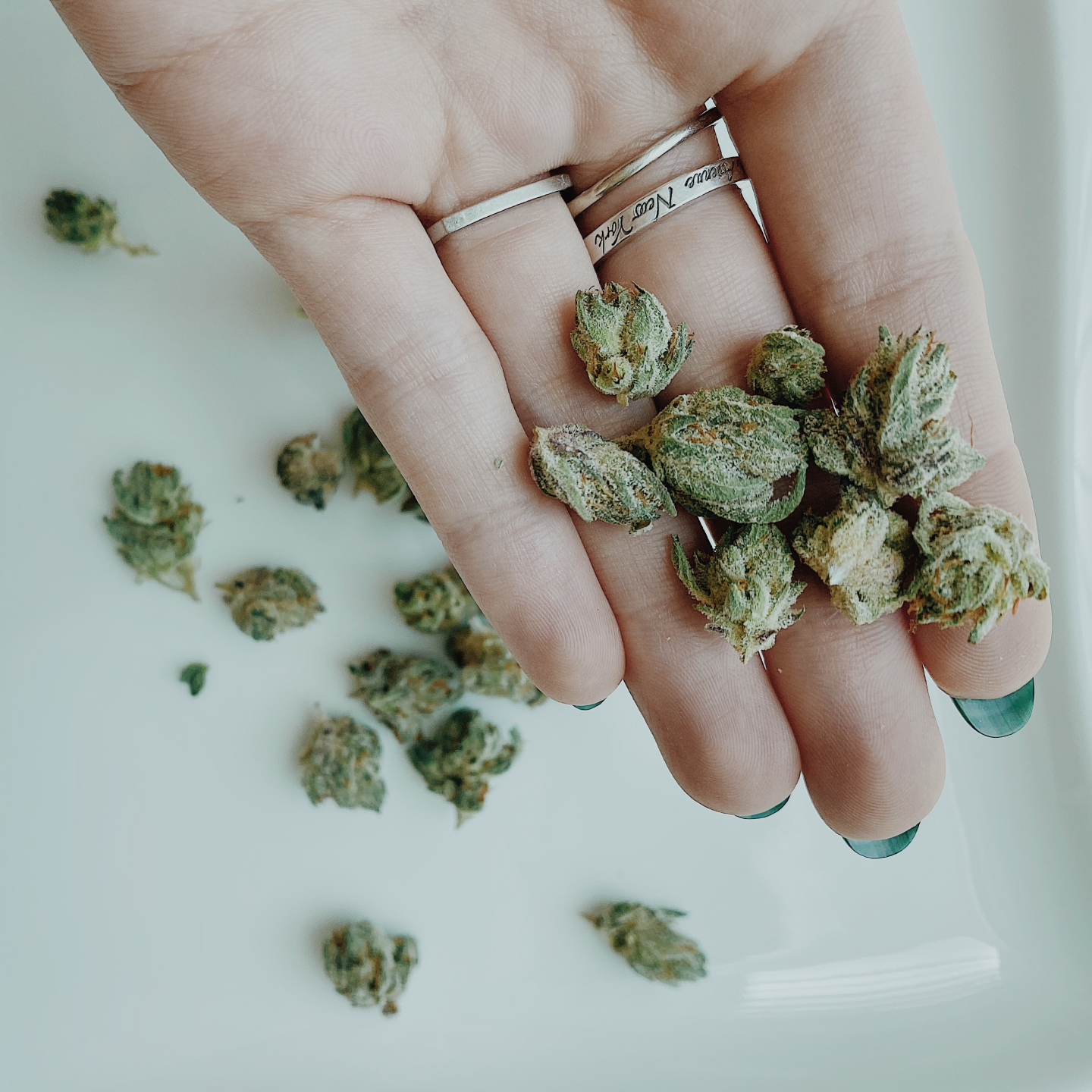
A low‑potency flower strain where a single small puff gives you a mild lift, not a couch‑locking high.
-
A balanced product with THC plus CBD, where the CBD tempers intensity and adds its own effects.
Choosing low‑potency flower (instead of 25–30% THC strains) lets you take a puff or two and stop at “just right,” without accidentally overshooting. Choosing low‑dose edibles lets you build up your dose in 2.5–5 mg steps instead of jumping straight to 20 mg and hoping for the best.
For many people in Monmouth County who want to function—commute, parent, work, train—microdosing and low strength products are not just safer; they are more useful.
Cannabis as a Swiss Army Knife (If You Know Which Tool to Use)
Cannabis can be a Swiss Army knife: one plant, many tools. The key is knowing which tool to unfold in which moment.
Think about:
-
Morning calm: A very low dose product like Bits Dragonfruit LOL 1:1 THC:CBC during a gentle yoga session in your Ocean Township living room, helping you feel grounded without feeling “high.”
-
Focused training: A microdose before a long run on the Henry Hudson Trail or while training for your half marathon, aiming for body awareness and flow, not distraction.
-
Present parenting: A carefully chosen puff of a Vigor Select Hippie Crasher 1G AIO Vape after work that softens the mental noise of the day so you can be more patient and present with your kids in Aberdeen, without feeling foggy or detached.
Each of those moments might call for a different tool: a low‑dose edible, a balanced tincture, or a puff of low‑potency flower. The more intentional you are, the more flexible cannabis becomes.
Setting Intentions: Controlling Cannabis So It Does Not Control You
The difference between cannabis as a supplement to your life and cannabis as an escape from your life often comes down to intention.
Before you consume, ask yourself:
-
What am I really trying to change—my mood, my pain, my sleep, my social anxiety?
-
Can I put that into a sentence?
-
Is this dose and product aligned with that goal?
Intention turns cannabis from something that “just happens” to you into something you actively shape. It keeps you in the driver’s seat of your own routine, whether you are in Eatontown, Marlboro, or commuting across Monmouth County every day.
Being Honest With Yourself
Authenticity starts with admitting where you actually are.
-
Are you using cannabis because it genuinely helps you function better—or mostly to numb out?
-
Are you taking more than you need because you are chasing an old experience that no longer fits your life?
-
Are you willing to go lower and see if you feel just as good—or better?
Being transparent with yourself is the foundation of safe, intentional use. If you are honest, low‑dose cannabis often ends up being not just enough, but ideal.
Integrating Cannabis Into Real Life in Matawan and Tinton Falls
When you treat cannabis as a tool, not a destination, it can fit into almost any chapter of your life in a safe, effective way:
-
A moment of calm during morning yoga before the Route 34 commute.
-
A focused, present drive to your half‑marathon training around Monmouth County.
-
A softer landing after a noisy workday so you can be a more patient parent in Aberdeen, sitting on the floor doing homework or playing games instead of doom‑scrolling on the couch.
Low‑dose cannabis supports those goals because it lowers the odds of being too high, too tired, or too foggy to show up for the things that actually matter to you.
You can always take more.
You can never take less than you already took.
If you keep that in mind, and you give yourself permission to go lower, slower, and more intentional, cannabis can become a powerful, flexible tool in your life—not the main event, but a quiet ally.
Have a question?
We're here to cultivate and nourish your personal relationship with this plant.
Have a Question?
We’re here to cultivate and nourish your personal relationship with this plant.